FDA Just Declared Your Sunscreen Might Be Toxic — The 12 Common Ingredients Now Under Fire (And the One New Miracle Filter That Changes Everything)
Only zinc oxide and titanium dioxide are officially “GRASE.” And even these might pose risks when misused.

The rest? Endocrine disruptors that stay in your blood for weeks. But a brand-new 2026 sunscreen ingredient approved by the FDA could finally make sun protection truly safe.

In 2021, the Food and Drug Administration (FDA), which oversees sunscreens as over-the-counter (OTC) drugs, proposed its latest update to the federal regulations. The agency reviewed 16 ingredients and reported that only two, zinc oxide and titanium dioxide (nano-TiO2), are “generally recognized as safe and effective”, or GRASE, based on the available information. (A GRASE designation means the ingredient is widely recognized as safe and effective by experts.)
Citing safety data, the FDA proposed that two rarely used sunscreen ingredients, aminobenzoic acid and trolamine salicylate, are not GRASE.
The FDA proposed that 12 other ingredients are not GRASE due to insufficient data: avobenzone, cinoxate, dioxybenzone, ensulizole, homosalate, meradimate, octinoxate, octisalate, octocrylene, oxybenzone, padimate O, and sulisobenzone. Many of these ingredients are commonly used in sunscreen products and are often combined, suggesting synergistic health effects. Products that use these ingredients are known as chemical sunscreens or chemical filters.
Oxybenzone, homosalate, and octinoxate are among the most heavily researched sunscreen ingredients and have been identified as endocrine-disrupting chemicals (EDCs), meaning they interfere with the body’s sex hormones and can increase the risk of reproductive harm, as well as adverse effects on children’s cognitive development during pregnancy and on cancer risk.
As for the other nine ingredients (avobenzone, cinoxate, dioxybenzone, ensulizole, meradimate, octisalate, octocrylene, padimate O, and sulisobenzone), the Food and Drug Administration (FDA) has determined that there is insufficient data to classify them as GRASE either. Octocrylene, avobenzone, oxybenzone, octinoxate, octisalate, homosalate, and avobenzone can be absorbed through the skin and enter the bloodstream, prompting further study of hormonal and reproductive impacts, reports an article in the 2020 International Journal of Dermatology. FDA studies have also reported that these ingredients remain on the skin and in the bloodstream for weeks after their use. Other studies have reported detecting sunscreen ingredients in breast milk, urine, and blood plasma samples. Absorption through skin application is not the only route by which sunscreen ingredients enter the body. It’s also possible for sunscreen users to inhale ingredients in sunscreen sprays and ingest some of the ingredients they apply to their lips.
The European Commission has weighed in on sunscreen safety and published final opinions on three chemical ultraviolet (UV) filters: oxybenzone, homosalate, and octocrylene. For homosalate and octocrylene, the commission proposed limiting the allowed concentrations of these filters in sunscreens.
Sunscreen use is increasing. Constant exposure to sunscreen chemicals raises concerns, especially given the lack of safety data for most ingredients.
To avoid synthetic chemical filters entirely, many consumers have turned to mineral-based sunscreens that rely only on zinc oxide and titanium dioxide, which the FDA classifies as GRASE. Beware, however, that the European Scientific Committee on Consumer Safety does not recommend the use of nano-TiO2 in formulations that may lead to exposure of the consumer’s lungs by inhalation (sprayable products and powders). Indeed, although human data are sparse and inconsistent, lung inflammation has been reported in animal models, the committee notes. In 2016, the EU Cosmetic Regulation authorized nano-TiO2 as a UV filter, except in products that could lead to lung exposure.
Look for a newly approved sunscreen ingredient that appears to be safer. The FDA approved bemotrizinol (BEMT), the first new active sunscreen ingredient in the U.S. in over 25 years, on June 9, 2026. Unlike traditional filters, it provides highly photostable, broad-spectrum UVA and UVB protection without degrading in sunlight, and it leaves no chalky white residue. Also known globally as Tinosorb S, it is highly efficient: less chemical is needed to achieve high SPF ratings. BEMT is not considered an EDC. Studies and reviews have found no evidence that bemotrizinol binds to estrogen or androgen receptors, meaning it does not disrupt the endocrine system. Unlike some older chemical filters, BEMT sits primarily on the skin’s surface and shows very low systemic absorption into the bloodstream. The FDA classified it as GRASE for both adults and children over six months old.
You will initially find it in specific brands (often sold internationally as PARSOL Shield) before it becomes standard in drugstore aisles.
— 30 —
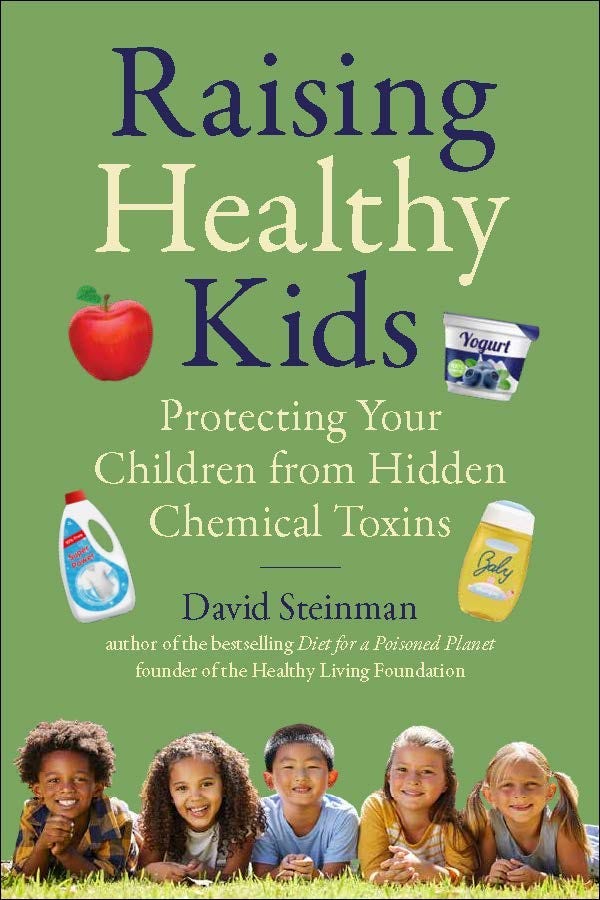
If this resonated, share it with someone who needs to hear it. Until next time — stay informed, stay proactive. On a personal level, your shopping, lifestyle, and health choices really do matter. How you live is a statement. Make your shopping choices count. That’s why I wrote my new book, Raising Healthy Kids: Protecting Your Children from Hidden Chemical Toxins, available on Amazon.com. Subscribe to my mypodcast at YouTube.